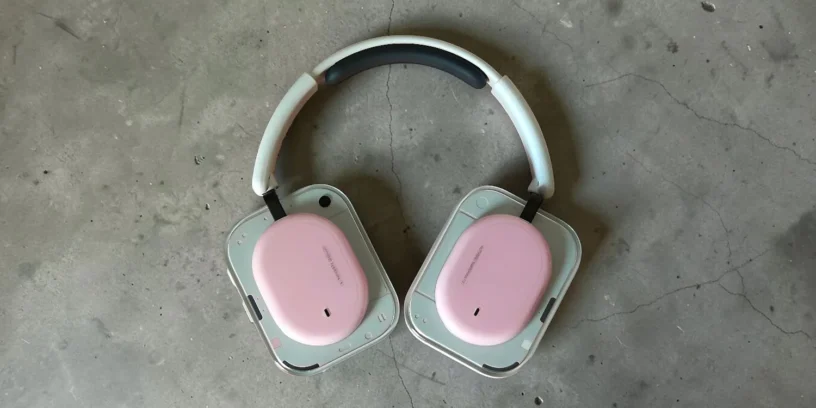



Nothing is back with a new offering that, at first glance, seems like a carbon copy of its flagship product, but hides a very distinct personality of its own. After testing and using the Nothing Headphone (a) After more than a week of testing, using devices provided by the brand for this analysis, the conclusion is clear: you don't need to spend twice as much to get an excellent experience, although there are some nuances you should be aware of. They are launched at a price of €159, practically half of what the Headphone (1) at launch: €299.
You can read the Nothing Headphone review (1) here 🎧
Construction and design: plastic, but with a steel structure
In terms of visual appearance and dimensions, the Headphone (a) They are virtually identical to the Headphone (1). However, the fundamental change lies in the materials. While the higher-end model opts for more premium finishes, here we find a construction made entirely of plastic material on the outer part of the earpiece. This makes them more prone to scratches if not carefully handled, but it does not imply structural fragility.
In fact, Nothing has maintained the high-quality internal skeletonThe flexible steel arms and Metal Injection Molded hinges, with fiberglass and reinforced nylon components, make it a solid product. While the buttons and volume roller have a less "rubbery" and more plasticky feel, this detracts from its tactile sophistication, but not its functionality.
One detail to keep in mind is that when you're not wearing them and you store them or leave them on a table, The corners of the headphones bump into each other causing small bumps. This constant wobbling can easily leave marks if you carry them in an unprotected backpack, so I recommend switching from a cloth bag to a more rigid case. I'd like to take this opportunity to show you This link shows the laptop case I'm using. currently for my headphones.

Comfort: Less weight = more comfort
One of the greatest advantages of this model is its weight reduction thanks to its lighter materials. We're talking about 19 grams less, 310g compared to the 329g of the Headphone (1). While this may seem like a small difference on paper, in daily use the difference is noticeable. Being lighter and having lower-density foam ear cushions, the headphones feel more comfortable. soft and fluffy Upon contact, I notice the foam adapts to the contours of my head more quickly; in the higher-end model, it's denser and takes longer to compress. We'll have to see in six months if the foam in the earcups cracks more easily for this reason, but initially, it feels solid.
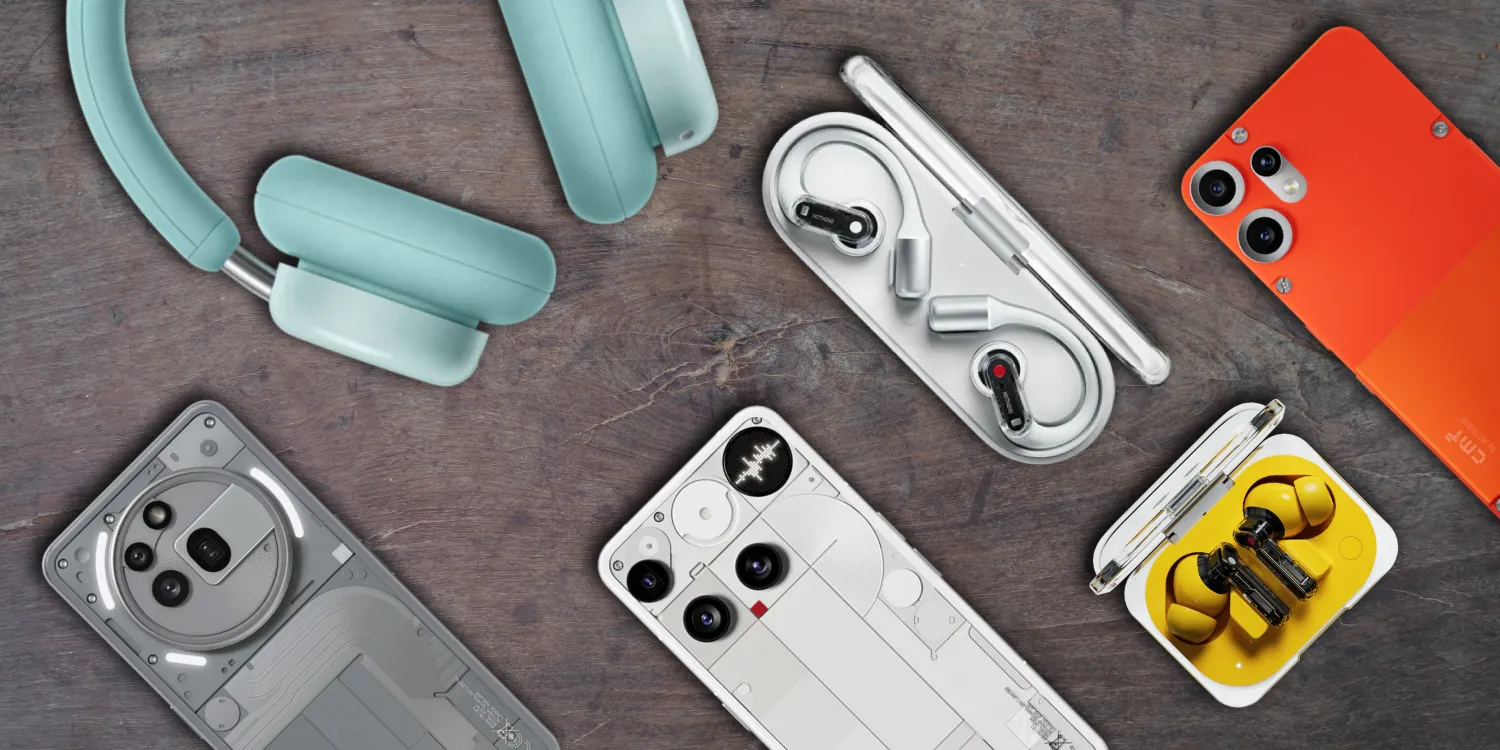
As a glasses wearer, I can confirm that after four or five hours of listening sessions, I haven't felt any pressure or pain on the temples. They are, without a doubt, the second most comfortable headphones from the brand, second only to the... CMF Headphone Pro. It is worth noting that they have IP52 certification, Therefore, they withstand light humidity, such as what might happen at the gym or if you get caught in a light drizzle outside. However, keep in mind that, although the pads are breathable, they tend to cause some sweating in hot weather. In summer, I still prefer and recommend other options like... Nothing Ear (Open) or the Ear (3).
You can read the CMF Headphone Pro review here 🎧
Sound quality: better than the high-end model?
In terms of acoustics, Nothing has made a curious decision. The driver is the same size as the one in the Headphone (1), but the diaphragm has been improved with a composite material. PEN + PU titanium coated. Despite not having the KEF adjustment, I find the default sound profile (balanced mode) more appealing than that of its bigger brother.
ADVERTISING
The sound is balanced, with a serious hits that have punch and muscle without excessively muddying the high frequencies. If you want straightforward sound right out of the box, these speakers more than deliver. I usually use them between the 50% and 80% volume settings, as they have more than enough power (in my opinion, the same as their bigger brother) and they isolate sound so well that no one around you will hear what you're playing unless it's completely silent.
However, if we get into technical nuances, the noise cancellation At 40 dB, it falls a step short of the Headphone (1)'s 42 dB, though it still performs admirably. The major drawback is in transparency mode, which is noticeably weaker, offering a somewhat muffled sound when speaking, similar to CMF models. On the other hand, call quality is excellent, and you are heard with perfect clarity.
Functionality and software: the power of Nothing X
One of its strongest points is its integration with the app Nothing X. This isn't a "cut-down" version just because it's model (a). We have almost the same options as in the more expensive devices. The only notable difference is that the bass boost It only has two levels instead of the five of the Headphone (1), but the rest is flawless.
The double connection It works perfectly, allowing me to be connected to my computer and mobile phone simultaneously. But where it really shines is in the equalizer. We have the simple mode (balanced, bass boost, vocals…), but if you're an expert, the advanced equalizer It's insane: it lets you tweak dozens of parameters, from frequencies to Q factor. And if you don't want to complicate things, the explore mode It lets you download profiles created by other expert users, which takes the sound to another level. I've attached an equalizer preset that I love in the image below.

Physical buttons and functionality: total control in your hand
One of the best things about Nothing is that it keeps the physical buttons on the right earpiece, avoiding touch panels that sometimes fail or aren't very reliable. The power slider is on the bottom, and the crown jewel remains the volume roller. It's a delight to raise and lower the volume so quickly, although, as I mentioned earlier, we notice the change in quality here: the feel is more plasticky and the movement feels "freer," losing that premium rubbery feel of the Headphone (1). That said, it's appreciated that they've added a sound to indicate when you've reached maximum volume.
We also have the paddle, That elongated lever for skipping songs works perfectly in Spotify, but I've noticed it doesn't work in browsers like Brave. On the other hand, the front button with a "click" (which Channel Hop uses by default) now allows for a very useful function: Take photos with your Nothing Phone at a distance, ideal for selfies without having to hold the phone.
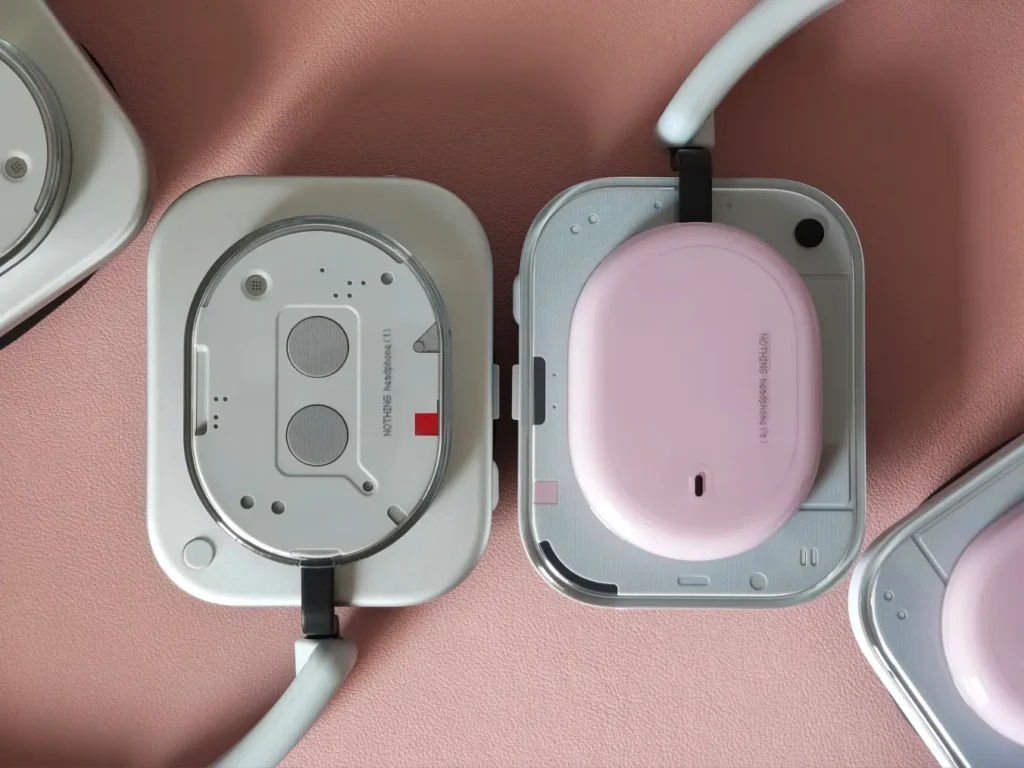
Inside the right earpiece, we find the flat button for Bluetooth pairing, which works very smoothly. Incidentally, I'd like to highlight the connection reliability, where the connection doesn't cut out even if I leave my phone downstairs and I'm moving around upstairs. The best part is that the app Nothing X It allows you to remap almost everything: mute the microphone, activate spatial audio, or change equalization profiles. Finally, I mustn't forget the 3.5 mm jack, a success for analog devices, although remember that the headphones must be switched on and charged for the audio to work via cable.
Autonomy and extras: breaking records
Where these headphones truly outperform much of the competition is in battery life. With ANC disabled, we achieved the 135 hours of use, This is 55 hours more than the Headphone (1). With active noise cancellation, we reach 75 hours. It's simply next-level battery life. Furthermore, its 5-minute quick charge provides 8 hours of use, eliminating any fear of being away from a power outlet.
On the other hand, in version (a) we've lost the wear detection feature (the music doesn't stop when you take them off) and the spatial audio lacks head tracking. Honestly, nothing particularly necessary or important in my opinion. Personally, I recommend disable spatial audio, because theater or concert modes generate a reverberation that makes the sound seem enclosed "in a box".
ADVERTISING
Who should buy the Nothing Headphone(a)?
This product is ideal for users looking for the best value for money within the Nothing ecosystem. It's a smart purchase if:
- You prioritize the comfort and lightness above the top materials
- Looking for a Excellent autonomy so as not to depend on the charger
- Do you want a full-bodied and well-balanced sound without needing to equalize
If perfect transparency or a more premium finish is essential for you, the Headphone (1) is still the one for you. For everyone else, these Headphone (a) are arguably the most well-rounded over-ear headphones Nothing has released to date.

- Design and construction
- Comfort
- Sound quality
- Noise cancellation (ANC)
- Transparency mode
- Autonomy
- Controls and functions
- Connectivity

Leave a Reply