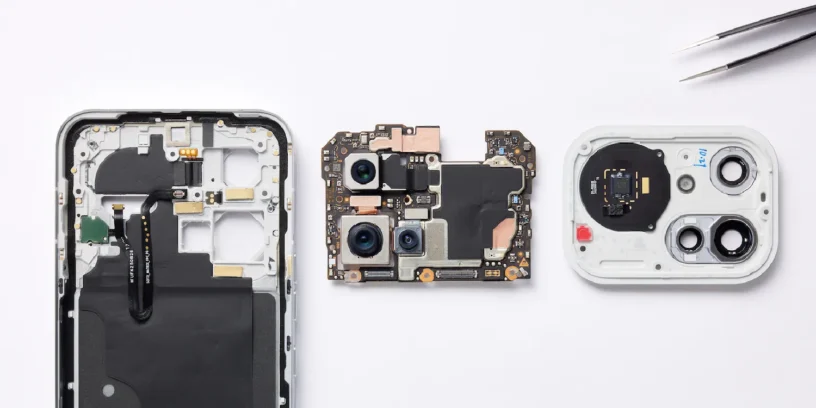


When Nothing launched the new Phone (4a) Pro, it stood out not only for making the leap to the aluminum unibody chassis, but also for how they managed to fit every internal component without losing the characteristic aesthetic essence that defines them. To showcase this device's engineering firsthand, Nothing's official community, alongside Zac, has shared an impeccable photographic teardown by photographer David Wilman, whom we thank for these incredible captures that allow us to appreciate the level of internal packaging achieved.
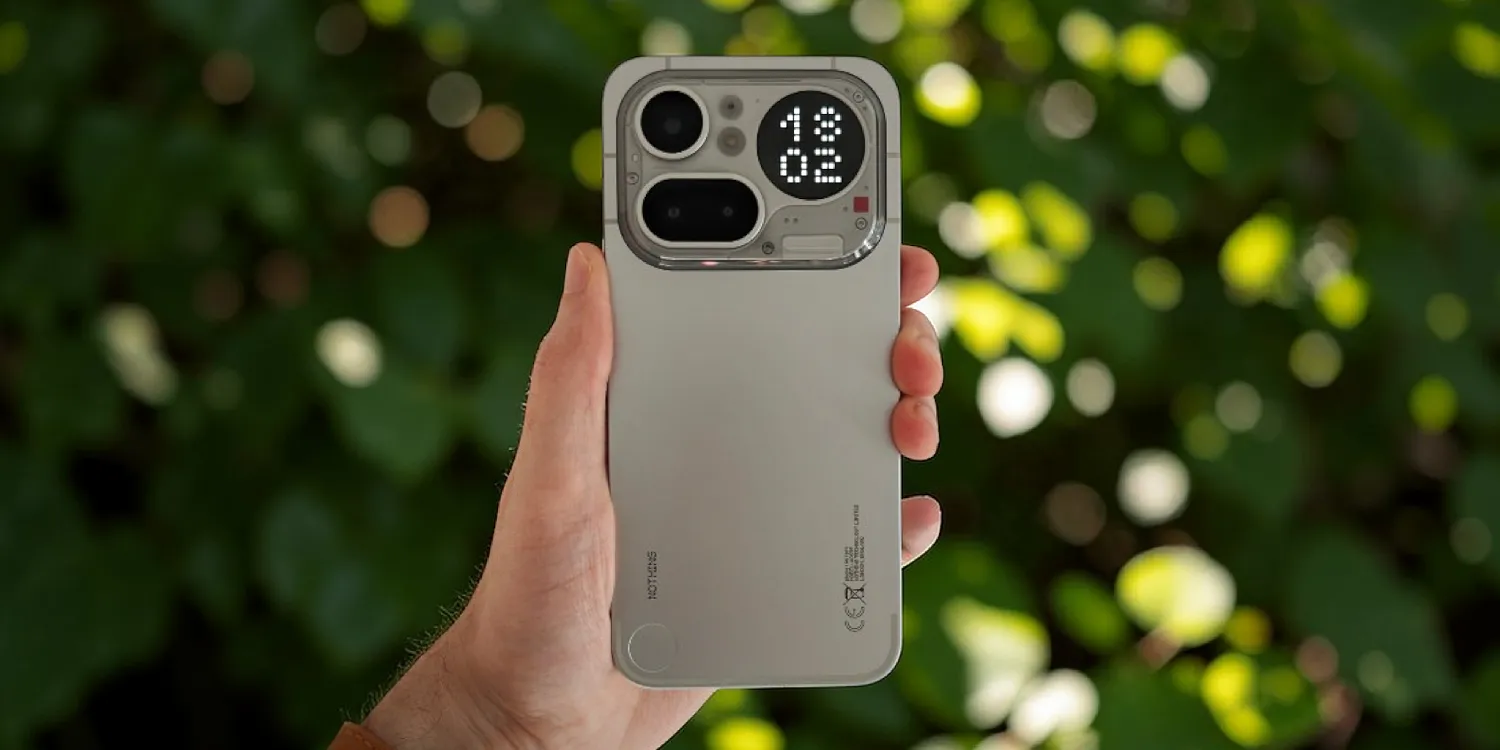
In this article we review, point by point and respecting the original breakdown published by the brand, the internal anatomy of the Phone (4a) Pro, from the screen to the motherboard.
Screen and cooling system
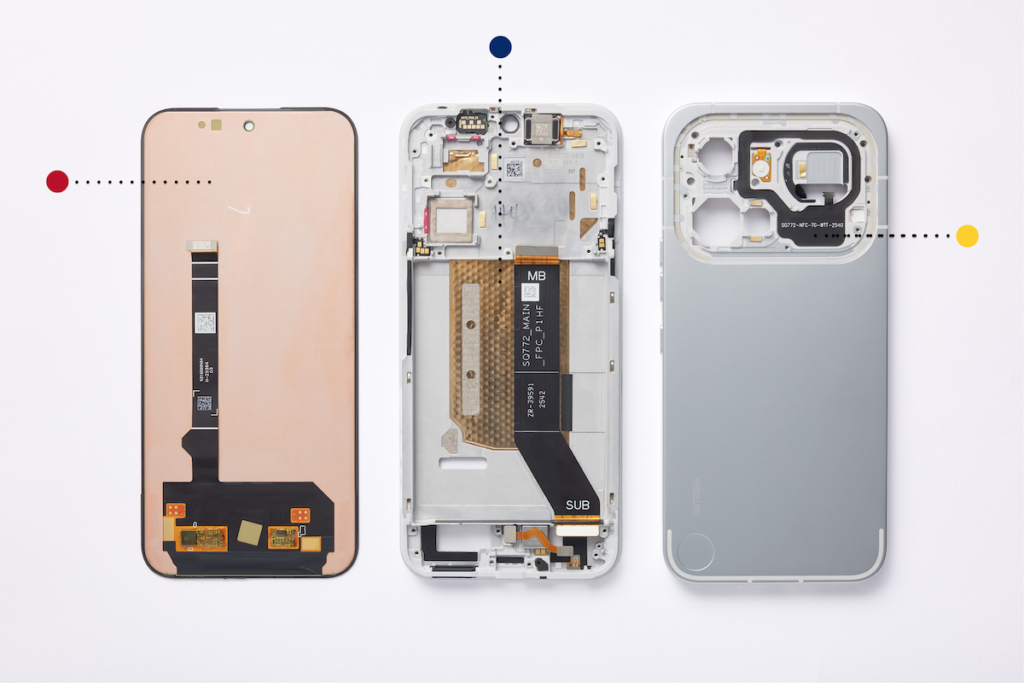
🔴 Display
The iPhone (4a) Pro's screen is a 6.83-inch AMOLED panel with 1.5K resolution, a pixel density of 450 PPI, and a 144Hz refresh rate, all protected by Corning Gorilla Glass 7i. It offers a smooth response for both gaming and multimedia playback.
It reaches a peak brightness of 5000 nits in HDR content and 1600 nits in general use, making it the brightest display the brand has ever mounted. For touch, it supports an instantaneous sampling rate of 2500 Hz, while the 2160 Hz PWM shading reduces eye strain during nighttime use.
ADVERTISING
🔵 Steam chamber
The cooling system features the company's largest vapor chamber, with a surface area of 5,300 mm², designed to keep the aluminum unibody chassis cool under heavy loads. Directly above it sits the 5080 mAh battery with 50W fast charging.
🟡 NFC antenna
The NFC antenna is positioned between the battery and the aluminum frame, responsible for managing mobile payments and contact readings.
Camera module
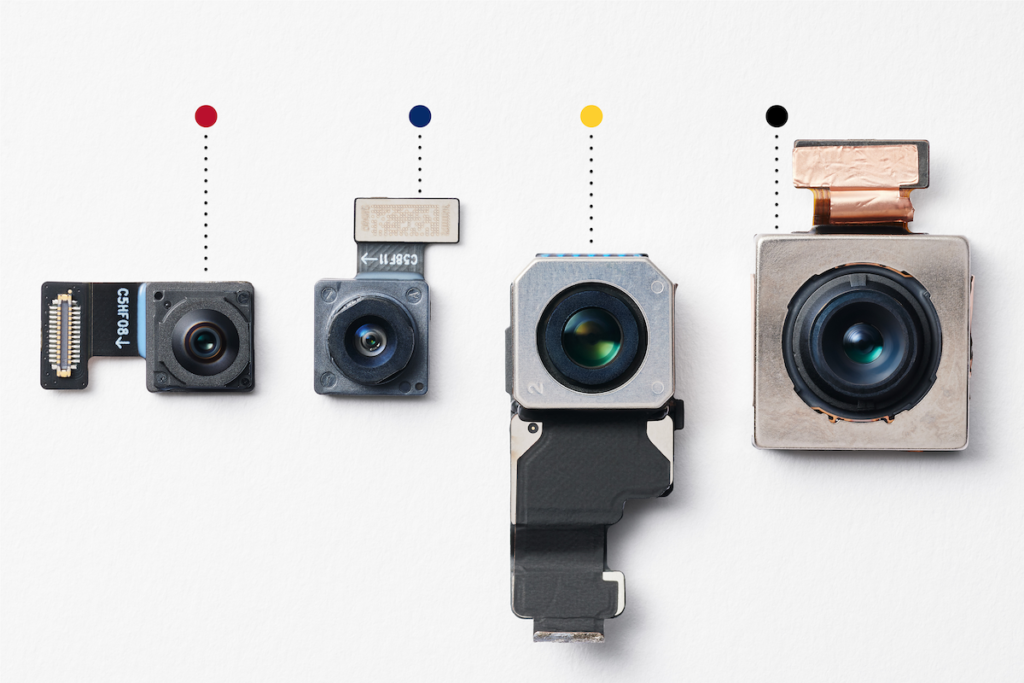
🔴 Ultra wide angle: Sony IMX355 8 MP (1/4″) sensor with a 120° field of view.
🔵 Front camera: Samsung KD1 32MP (1/3.42″) sensor with an 89° field of view.
🟡 Periscopic telephoto lens: Samsung JN5 50MP (1/2.75″) sensor with 3.5X optical zoom and OIS.
⚫️ Main camera: 50 MP (1/1.56″) Sony LYT700c sensor with optical stabilization (OIS).
Glyph lighting and secondary components
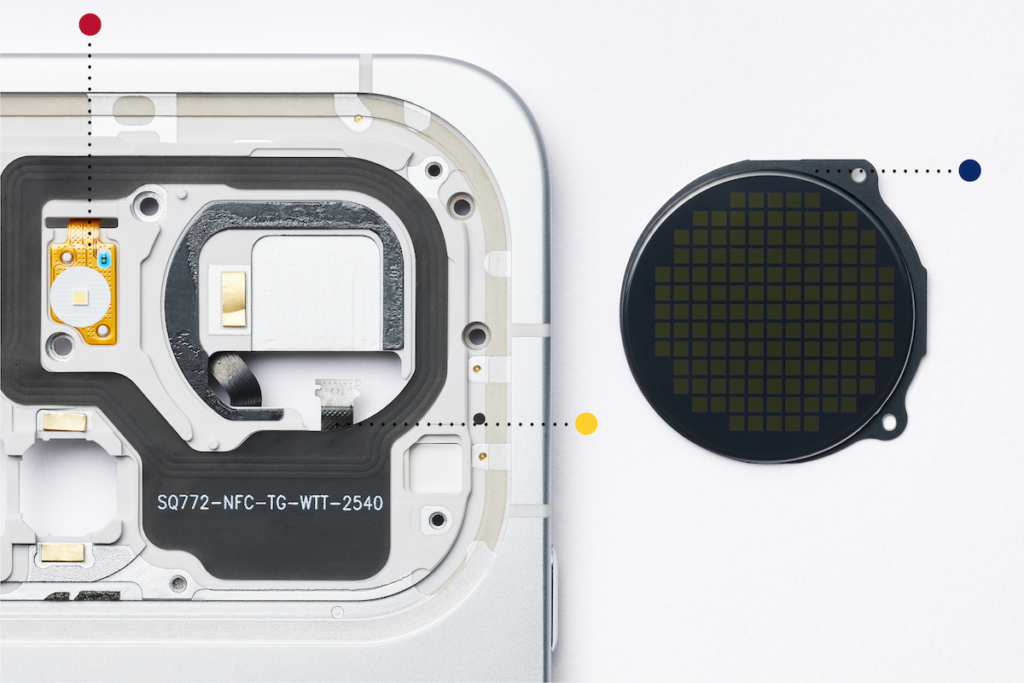
🔴 Single LED Flash
🔵 Glyph Matrix
The Phone (4a) Pro incorporates a Glyph Matrix system composed of 137 mini-LEDs. Although it has fewer light points compared to the Phone (3), it offers a larger surface area and achieves a higher brightness level (around 3000 nits). This allows for clearer display of live notifications, charging status, and timers.
🟡 FPC of the Glyph Matrix
The flexible printed circuit board (FPC) connects the light matrix to the processor. Its use allows for the transmission of electrical signals in confined spaces within the chassis.
Processor, memory and connectivity
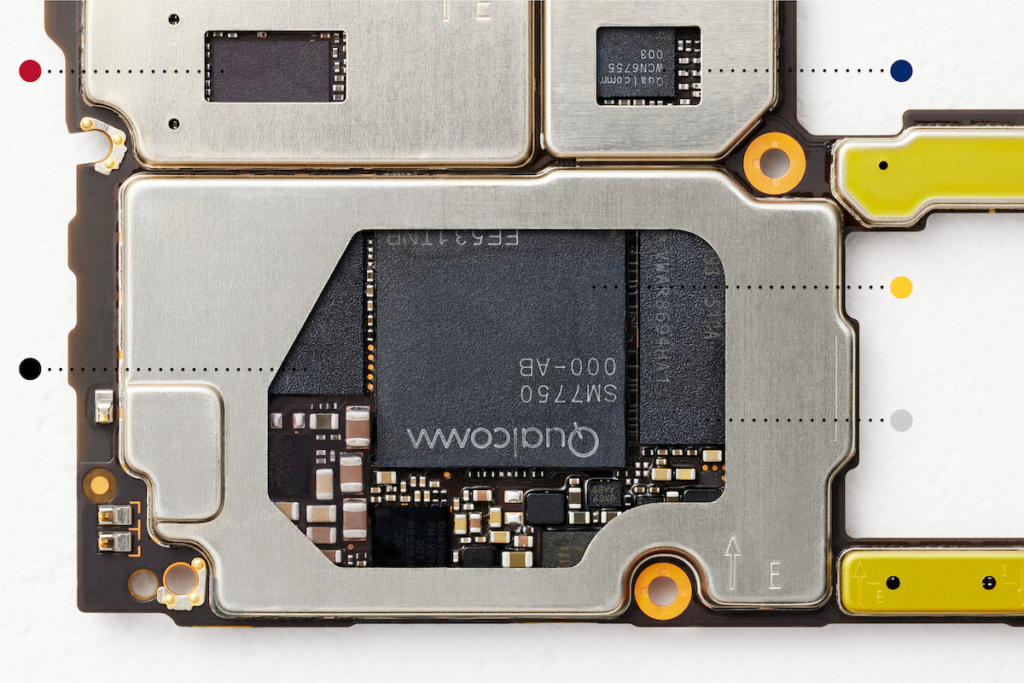
🔴 RF Transceiver
🔵 Wi-Fi chip WCN 6755
🟡 Snapdragon 7 Gen 4
Manufactured using TSMC's 4nm process, this 8-core processor reaches frequencies of up to 2.8 GHz. Compared to the previous generation, it offers a 27% increase in CPU performance, a 30% increase in graphics rendering, and a 65% increase in AI processing capacity.
ADVERTISING
⚫️ Storage (ROM)
⚪️ RAM
The combination of UFS 3.1 storage and LPDDR5X RAM allows for double the memory read and write speeds compared to previous standards (UFS 2.2), while also improving the energy efficiency of the memory in a 30%.
Motherboard and lower components
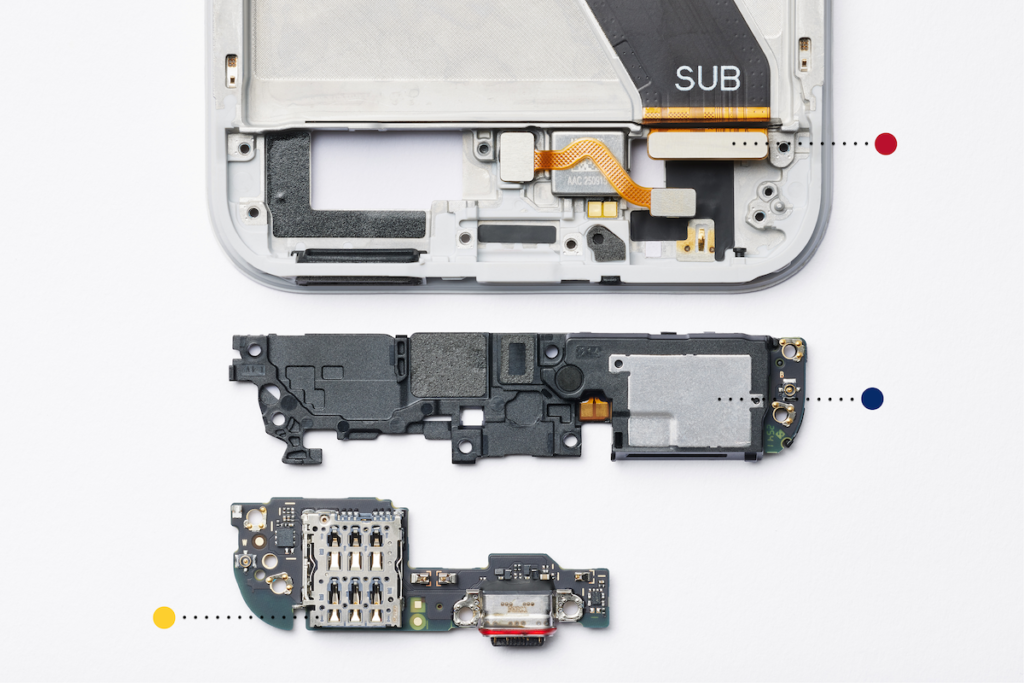
🔴 FPC Main
It's the flexible cable that runs the entire length of the phone, connecting the upper motherboard to the lower subboard. When a call comes in, the modem receives the signal, sends it to the SoC at the top, and the SoC relays it back through the FPC to the lower speaker and haptic engine.
🔵 Lower speaker
It is part of the device's stereo speaker system, responsible for the main audio playback in calls and multimedia content.
🟡 2-in-1 SIM Tray
It allows you to store two nano-SIM cards or one SIM card along with a micro SD card to expand internal storage.


Leave a Reply