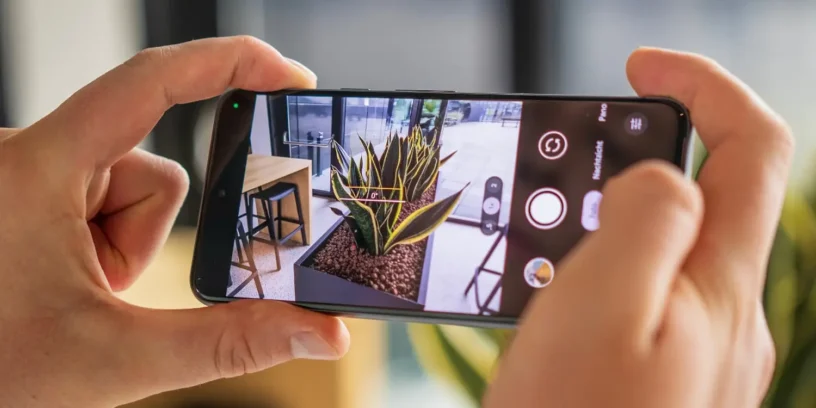

I am a user of a Nothing Phone (2) For about a year and a half now, I've been part of its evolution in the photographic aspect thanks to multiple updates that have Improved color interpretation, processing speed, and low-light quality. Despite these advances, it is still not a benchmark in photography, but it performs solidly in most situations.
In this analysis we review how the camera has improved Nothing Phone (2), What aspects remain its weak points and is it worthwhile for those seeking a good photographic experience?.


📷 Camera evolution: improvements and changes
Since its launch, Nothing has worked on optimizing the camera of the Phone (2) with various software updates. Among the most important improvements is the arrival of Nothing OS 2.0, which optimized the quality in dimly lit scenes, improved contrast management in the portrait mode and increased the sharpness of faces.
The camera system of Nothing Phone (2) It consists of a sensor Sony IMX890 50MP as a main camera and a sensor Samsung JN1 50MP for the ultra-wide-angle lens. These sensors have received software improvements, such as the implementation of True Lens, which allows capturing images with more detail and better balance. Furthermore, the processing time, which in previous versions was noticeably slow. Now, photos are saved about three times faster than at launch, offering a smoother experience.
The ultra-wide-angle sensor The 50 MP camera offers high-quality very decent, outperforming many competitors who opt for lower resolution or lower quality sensors. Chromatic aberration is minimal, The colors are rendered quite faithfully without generating exaggerated purple borders in high-contrast areas. Overall, the results with this sensor are good, although there is still a noticeable loss of detail at the edges of the image, which is common with this type of lens.


On the other hand, with the launch of the series Nothing Phone (3a), which will feature TrueLens 3.0 and a new algorithmic system, is expected that some of these improvements will make their way to the Nothing Phone (2) or (2a) in the future. There's no official confirmation, as Nothing will first focus on new devices, but it's something that It is being studied.
🎨 Color, portrait mode and HDR
One of the most obvious changes has been the improvement in color interpretation. Initially, the Phone (2) offered images with overly saturated colors, which gave it an unnatural appearance. Now, the calibration is more precise, although Some red tones continue to darken excessively. And HDR doesn't always balance strong lights well, causing overexposure in certain areas.
The portrait mode It is one of the best-resolved sections. subject clipping is necessary, without serious errors, and the effect The bokeh looks quite natural.. In some cases, blurring can be somewhat excessive, But overall, the result is realistic and competent.


As for HDR, its implementation has improved, but in some scenes it can overemphasize the effect. Therefore, I recommend taking the same photo with HDR both on and off. to compare which style you prefer, since in some cases the non-HDR version can look more natural. If after taking the photo you notice that the colors aren't entirely accurate or that the image has too much contrast, you can make minor adjustments with an editing app, such as Snapseed, which allows you to quickly and easily correct lighting and color details.
🤳 Front camera: good performance with room for improvement
The Nothing Phone (2) features a front-facing camera 32 MP, which offers quite solid performance, especially with good lighting. The level of The detail is remarkable., and the The dynamic range and colors are represented quite accurately.. In some situations, the tones may be slightly saturated, But overall, the balance is correct.
HDR in selfies does its job, but in backlit situations may over-process the image, resulting in an excessively blue sky and over-brightening faces and bodies, which can make the photo it seems unreal or even a hoax. Even so, under optimal conditions, the results are good and offer more than enough quality. In the following images, I'll show you a couple of unedited selfies. The first was taken in a well-lit environment (HDR off), and the second in the worst possible conditions, backlit (HDR on).


🔍 Macro mode: Is it worth using?
The Nothing Phone (2) features a macro mode that allows capturing images a distance of between 4 and 5 cm of the object. It works well in terms of detail, but it has the problem that, being so close, the perspective distorts: the front part of the object appears exaggeratedly large, while the background is reduced too much.


To avoid this effect, it is best use the main sensor with a 2x zoom, which allows you to step back a little further and get a picture with a more realistic proportion. This way, a better balance is achieved in the image without the distortion generated by macro mode.
📷 Advanced photography: RAW mode and Pro mode
The Nothing Phone (2) includes a RAW mode, Ideal for those looking to edit their photos without losing quality. It also features a Pro mode, which allows you to manually adjust parameters such as ISO, shutter speed, exposure, and white balance, which gives more control to advanced users.
📌 Do I recommend the camera on the Nothing Phone (2)?
The Nothing Phone (2) It's not a phone designed for those looking for the best camera on the market, but it offers solid performance in most situations..
Your camera is Versatile, functional, and able to adapt well to different scenarios, especially with good lighting, where it can deliver results remarkable and well-balanced. Furthermore, it has improved over time, both in image processing as in the color interpretation.


If you need a camera all-rounder, that works well overall and with software that keeps evolving, the Nothing Phone (2) is still a very valid option today.
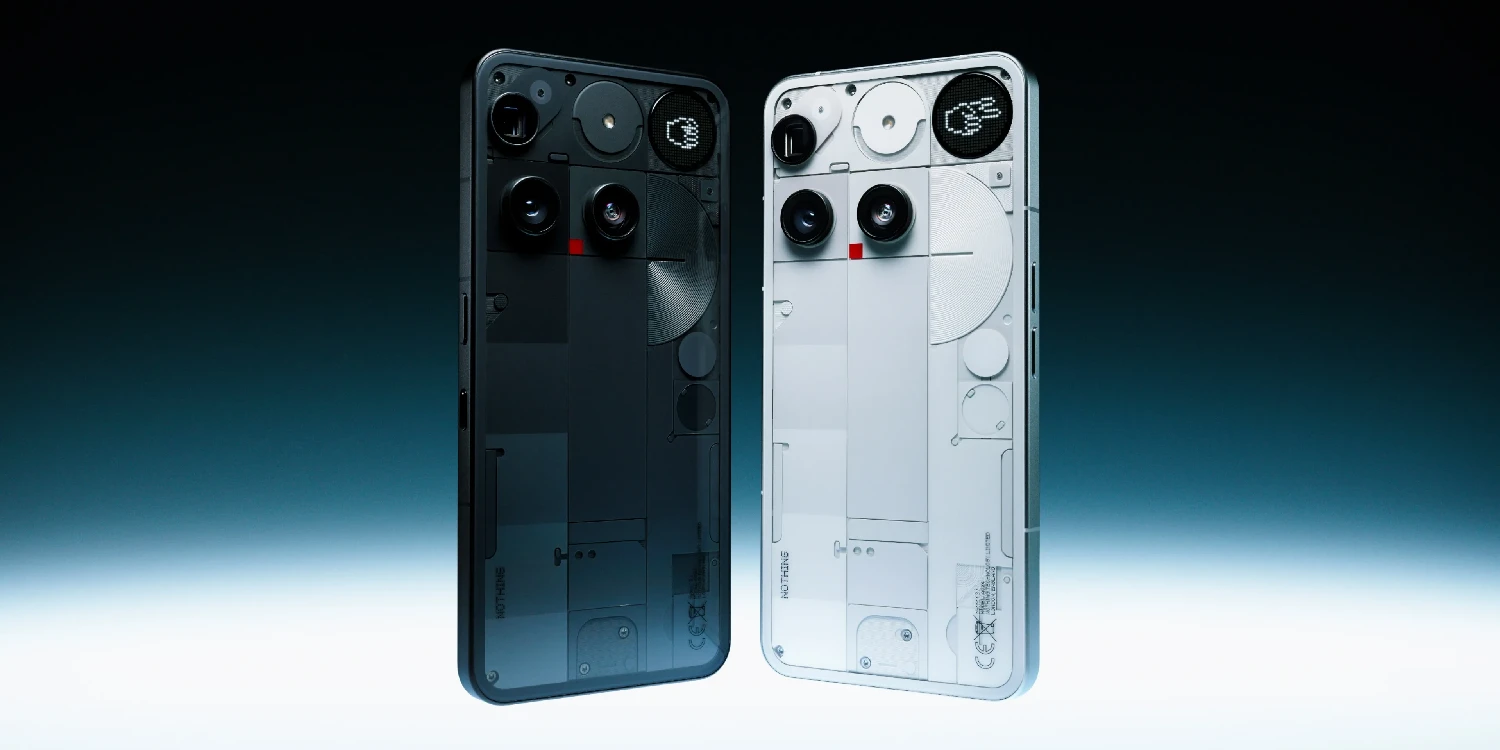
Note: All the photos attached to this article were taken in automatic shooting mode with the Nothing Phone (2) and I subsequently used the Snapseed app to retouch them in a few seconds.



Leave a Reply