
From its inception, Nothing has strived to stand out. In a market saturated with smartphones and headphones that all look alike, his aesthetic proposal Based on transparency, it doesn't go unnoticed. But that's precisely the big question: how transparent is a Nothing product really? Are we seeing the inside of the device as it is, or is it a carefully designed illusion?
Seeing is imagining: the visual language of Nothing
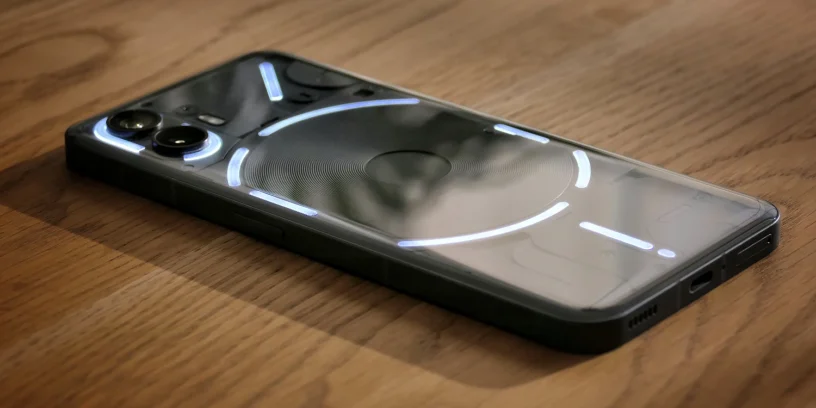
The Nothing Phone (1), and later the Phone (2), attract attention with a translucent back that seems to reveal its components. This first impression creates a special connection with the user: one feels as if they are seeing something that is normally hidden. However, upon closer inspection (or by opening the device, like they do at iFixit), the truth is revealed: You're not seeing the inside as it is., but an organized and stylized representation of what lies beneath.


And this makes perfect sense. The actual interior of a smartphone is functional, but cluttered: cables, circuits, adhesives, unfinished materials. Nothing does what it does. build a second skin, A design about design. That Gorilla Glass 5 back reveals perfectly aligned geometric shapes that conceal components like the motherboard and battery without directly showing them. But this isn't a negative; on the contrary, it's a way of making the invisible visible, maintaining a balance between aesthetics and functionality.

What's interesting is that some of these visible elements, like the wireless charging coil, are real and exposed, while others, like the panels covering chips and connectors, are purely visual additions. Everything has been designed to convey order, technology, and minimalism. And, of course, to complement the already iconic... Glyph interfaceThat set of LEDs on the back that responds with animations to calls, notifications, charging, and more. A system that doesn't just have one function, but... visually represents the interaction with the device.
An evolution consistent with each generation
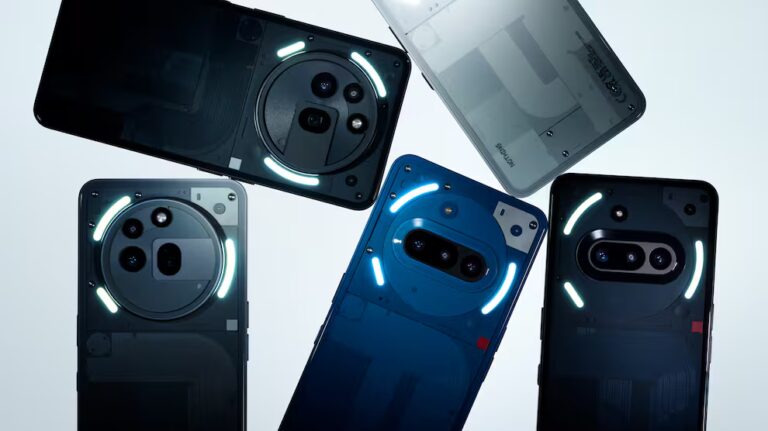
This same philosophy has been maintained in later models such as the Phone (2a), Although built with somewhat less expensive materials (a plastic back instead of glass), it still maintains that recognizable aesthetic. The Glyph interface is also present, albeit in a more simplified form, and the visible internal elements follow that pattern of visual order, with panels that stylize what lies beneath without necessarily revealing it.
Even in the latest series Phone (3a), Nothing refines its approach: it maintains that transparent back, now even more minimalist, framed in materials like recycled aluminum or polycarbonate depending on the model. What you see is still a blend of what's actually there and what's been designed to look like it, but with more maturity in its execution. In all cases, the goal is the same: to showcase a vision of open, refined, and distinctive technology.
Why is it so difficult to make Nothing transparent?
It might seem that transparency is a shortcut to making something look good, but in reality, it's quite the opposite. Carl Pei explains this in one of his videos from Nothing:
«"I mean, the main problem is that there are a lot of transparent elements, and when you have a lot of transparent elements, it not only has to look good on the outside, it also has to look good on the inside.",
because any speck of dust will be visible.
So our manufacturing process is crazy. If you visit the production line, the humidity is incredibly high; it's like a rainforest.
We have a central humidifier throughout the entire production line
With mist coming out, and many of the stations where people assemble the components have their own humidifiers. And all this is to help the dust settle. Even so, we reject a lot of products.I would say that we reject it as a 20-30% that has to be redone
because a tiny speck of dust got in somewhere. So it's very, very, very frustrating. It takes much longer. The production rate is lower. It's more expensive.»
This approach not only reinforces the brand's visual identity but also demonstrates the level of technical effort involved. It's not the same as simply revealing the interior; it's about redesigning the interior so that it truly deserves to be seen.
And the headphones? Literal transparency
Where transparency is even more real is in headphones. From the Ear (1) to the latest Ear (Open), Nothing has taken its visual philosophy to the next level. Through its transparent casing, you can see the microphones, part of the printed circuit board, the charging contacts, and even some magnets.


But achieving this result was no easy task. During the first months of production of the Nothing Ear (1), In 2021, Carl Pei (CEO of Nothing) explained in an interview that the rate of valid products was only 50%. The reason? The high level of aesthetic requirements: the magnets, for example, had to be hand-polished to avoid imperfections, and special adhesives were used to prevent bubbles or stains on the transparent casings. Any unit that did not meet this visual standard was discarded.
Today, Nothing doesn't face that discard rate, but this anecdote makes clear the level of detail that was pursued from the beginning.
In these products, the visible elements are functional parts of the device, precisely arranged to visually fit within this minimalist, transparent design language. It's real technology, exposed without filters, but with style.
Transparency as a language, not as a trick
None of this is accidental. At Nothing, transparency isn't just an aesthetic layer. It's a language, a way of communicating openness, innovation, and personality. Yes, not everything you see is functional in the case of phones, but what you do see Yes, it represents what's there.. It's not a lie, it's an interpretation: like seeing the skeleton of a machine, but with a light designed to guide you.
In headphones, the process goes a step further, and almost everything is on display. You not only see the technology, but you also perceive the engineering effort behind it: designing products that work and that can also be visually showcased without any reservations.
Nothing's products are intentionally transparent, but not naively so.. They are a work of industrial design that blends precision, aesthetics, and functionality. They are not intended to be opened or disassembled by the user, but rather to reveal just enough, to say a lot without needing to explain everything.
And that, precisely, is its charm.



Leave a Reply