I've been using it for about a week. Nothing Phone (3), coming from Nothing Phone (2), which has been my main phone for the last two years. So I have a very recent direct comparison between the two.
I'm not here to repeat what's already been said a thousand times, but to tell my personal experienceWhat I liked, what I didn't like so much, and those things that you only discover by really using it on a daily basis, with my several dozen apps installed, using the camera extensively, paying with my cards via NFC, traveling with Android Auto, calling and using social media, etc.
Bold design and premium materials
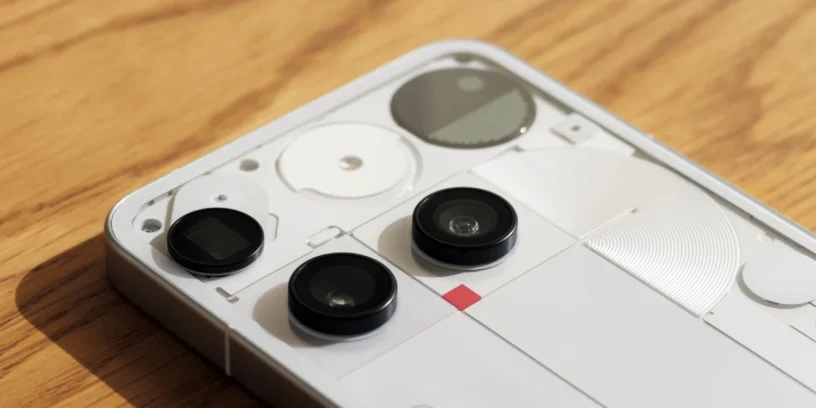
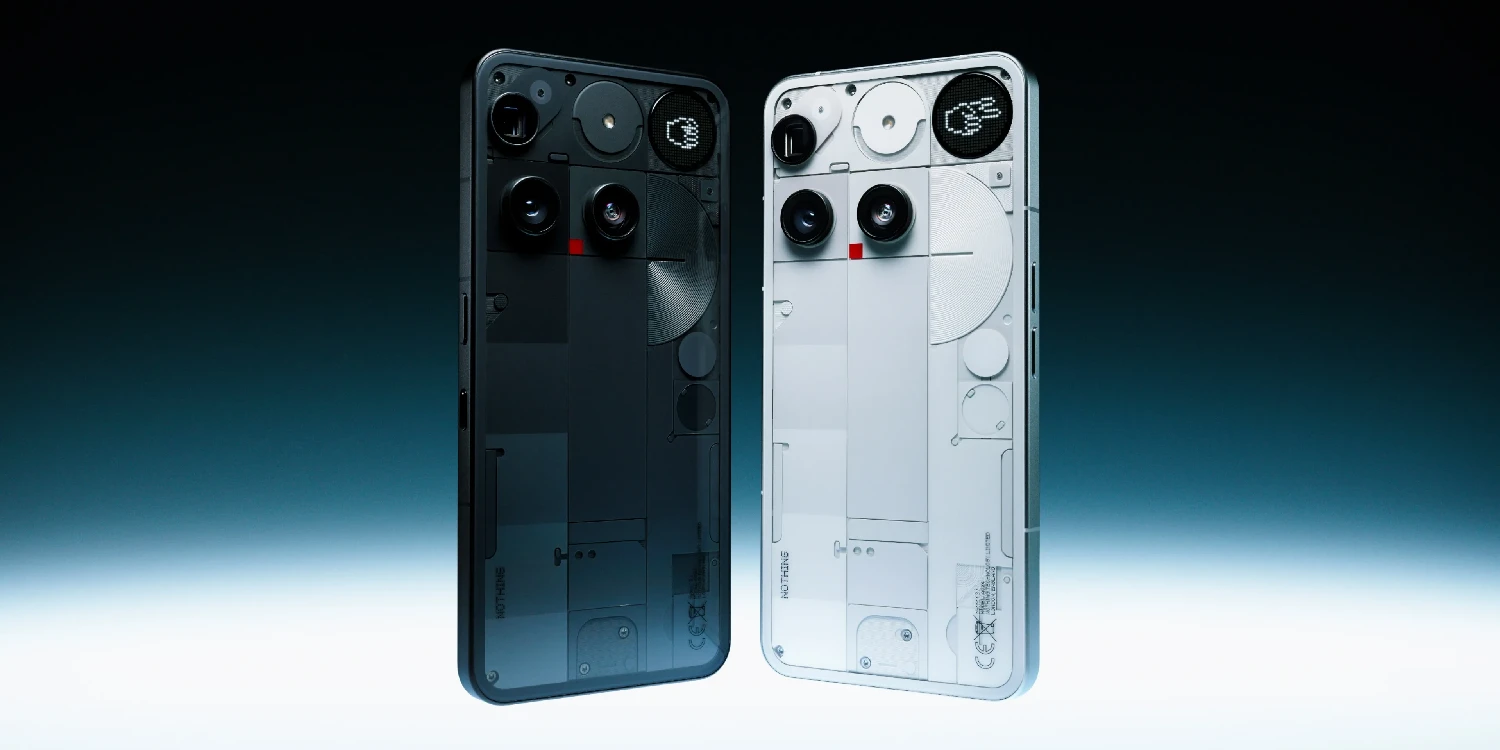
At first, I admit, the design of the Phone (3) seemed strange to me. But once I held it in my hand, everything changed. The back is full of details, The aluminum frame feels high-quality and The symmetry of the bevels is a delight.. The buttons have a good feel and the overall impression is of a premium product.
Compared to the Phone (2), this design now seems fresher and has more personality. Seeing them side by side, the Phone (2) seems more elegant, but it even feels boring now. The only thing I'm not entirely convinced about in the design is its thickness, It's noticeable in the hand and in the pocket. It does give it a robust feel, yes, but I'd prefer something slightly thinner.
One thing I found to be a great detail, although it could be improved, is that the phone comes with a clear plastic sleeve included. It's not top quality, but it'll do the trick until you find a better one. I'm personally waiting for a more durable option like the Spigen to come out.
Bright screen and more immersive sound
The screen It looks much better outdoors., The increased brightness is noticeable, and the colors are slightly more vibrant. Then there's the controversy surrounding the screen not being LTPO… it will likely use a bit more battery, but it doesn't affect the panel's quality at all.
The sound has also clearly improved. The top speaker, which previously acted as an earpiece in the Phone (2) and sounded somewhat tinny, now offers a more mature and fuller audio experience. Calls sound much better, with much more depth in the bass and substantially clearer., And when listening to music or videos, the stereo sound is more balanced and has better presence. It's not the best speaker on the market, but the improvement is noticeable.
Battery: a slight but sufficient improvement
Regarding autonomy, It arrives without any problem at the end of the day, Even with moderate to heavy use, it holds up well. I don't think it would last me two days with intensive use, but I do notice an improvement over the iPhone 2, which barely lasted. Fast charging has improved slightly, but since I usually charge it overnight, it's not something that worries me too much. Overall, it's a stable battery and more than enough for most people.
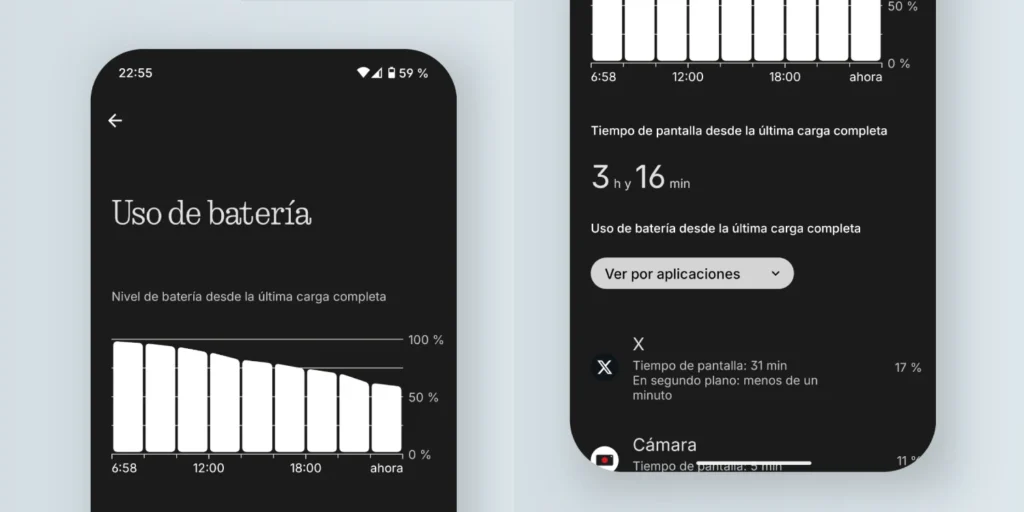
As you can see, I still have almost 60% battery left at the end of the day after 3 hours and 15 minutes of screen time. I've done some tests without charging it overnight and managed to get two days with moderate use. It offers about 6-8 hours of screen time on a single charge, depending on usage.
Improved haptic motor and functional unlocking
The haptic engine has improved a lot. On the Phone (2), it felt cheap and lacked detail. On the Phone (3), every vibration while typing or navigating feels more precise and pleasant. It exudes quality. Face unlock and fingerprint recognition work just as well as on the previous model: very fast, reliable, and only fail in near-total darkness.
Nothing OS remains their strong point
Nothing OS It remains clean, fast, and bloatware-free. The animations feel more polished, and everything moves smoothly. Even transferring apps and 75 GB of photos on the first day went perfectly. I only noticed some slight overheating during that process. Under normal use, the temperature remained stable.
I've had countless apps open and running in the background, I've been switching between them, and I've even played a few games (although not very graphically demanding ones), and Everything has gone well.
Essential Space: now it's starting to make sense
With the integration of Google Calendar, Essential Space has become much more useful. If you come from the Google ecosystem, like me, it makes even more sense now. You can ask it to remind you of tasks, and if you specify a date and time, It automatically adds it to your calendar.. Besides, You can edit the title and audio transcript If there are errors, which is very useful.
I've also been surprised by how well the physical button (Essential Key) works: I've only accidentally pressed it a couple of times, and if that happens, you can simply swipe back on the screen to cancel it without taking a screenshot. Many people complain about accidental screenshots, but this gesture easily prevents them if you press it by mistake.
Glyph Matrix: lots of potential, but also many mistakes
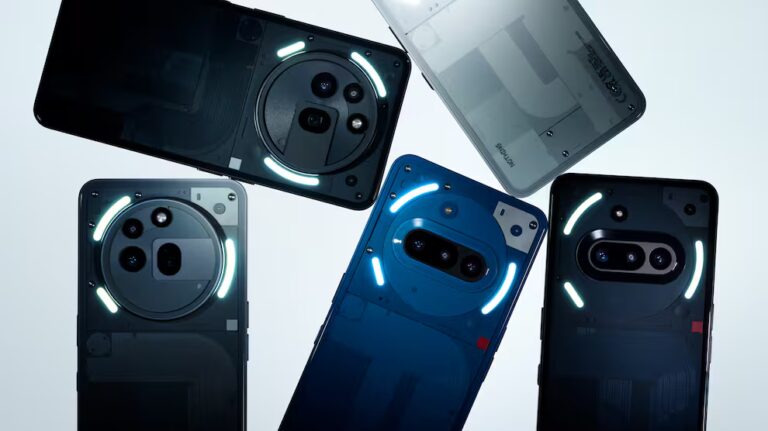
I had a feeling that I was going to miss the lights of the Phone (2), but the truth is that it hasn't been like that. The Glyph Matrix provides much more information And it has a more useful impact. It's an evolution that convinces me, even though it's in its initial phase.
And here comes the big "but". The rear screen is amazing… when it works. I love being able to assign images to notifications, like having a garage door logo appear when it opens and the sensor alerts me, or a cute koala pop up when my wife texts me… but there are constant glitches.
[Updated 23/07/2025] Nothing has fixed the bug in record time with the latest update generative ringtones and notification sounds. Every contact and every notification is unique, and Glyph Matrix reflects this with its individually generated animations. However, the essential notification rules still frequently fail, even when properly configured. Sometimes the notification animation appears, but the custom icon doesn't. This is frustrating because this screen is the most distinctive feature of the device.
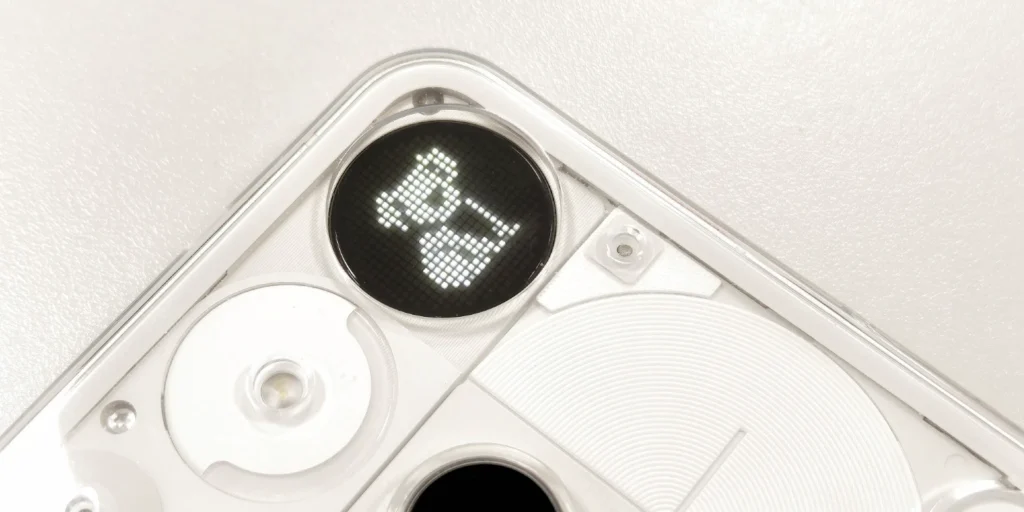
When it works, it's great., But it's still very much a work in progress. I hope that with Nothing OS 4 and community feedback, it will truly improve. I want genuine integration with timers, system apps, an assistant that doesn't require rotating the phone, and so on. Not something isolated just for games or purely decorative. It has a lot of potential, but it still needs to be developed.
The Glyph Matrix can also be used as rear light. In this model, the light is somewhat more focused and softer than that of the Phone (2), but it perfectly fulfills its function. Personally, I find it more pleasant than using the camera's flash, which is always more harsh.
Essential search: agile and useful
I was surprised by how quickly this feature responds. You can ask questions and the AI gives you a short explanation, with text or even images if applicable. It's concise, which makes it very convenient for quick queries.
You open the app drawer and there it is: a search bar that finds everything. Settings, contacts, photos, widgets, files… everything appears instantly. You can even type questions and the AI will answer you concisely (3-4 lines). He doesn't get carried away like other attendees. Yes indeed, It can only be used with text., Not by voice, which I miss.
Cameras: clear improvements, especially in zoom
One thing I also noticed about the Nothing Phone (2) is that, When taking photos in quick succession, the Phone (3) responds much faster. That slight delay that used to be present in the Phone (2) has completely disappeared. It's a detail that makes a difference if you're taking quick photos or burst shots.
The photographic experience has taken a remarkable leap forward compared to the Nothing Phone (2). One of the biggest stars is the periscope camera, It features 3x optical zoom, which can be combined with up to 10x digital zoom with minimal loss of detail. From there, you can zoom up to 60x, but the quality drops considerably, as expected. Even so, it can be useful for specific situations or if you have no other option, although it's heavily processed with AI.
Another thing I've noticed is that There is some inconsistency in the warmth and tone of the colors When you switch between different cameras, sometimes going from the main sensor to the wide-angle or telephoto lens changes the tone quite a bit, which can disrupt the uniformity if you're taking a series of photos of the same environment.
The macro mode on the telephoto lens is spectacular: You can zoom in to about 10 cm and apply a 6x zoom, Ideal for small objects. Interestingly, you can do the same thing with the main camera without having to activate a specific macro mode, as it does exactly the same thing, but allows you to zoom in even further, albeit with digital zoom.
The main camera has worked very well for me, even in backlit situations. It doesn't produce annoying glare, and the colors are generally accurate, although sometimes with a bit too much contrast or saturation. Overall, It doesn't wash the image as much anymore. Like the Phone (2), it doesn't define the edges so artificially. I prefer this new processing, even if it means a bit more noise.
The wide-angle lens is the one I use the least., But it performs well during the day. As soon as the light drops, it struggles considerably and the quality falls. When zooming, it suffers from the same problem as the cameras on the Nothing Phone (2): a watercolor effect. When zoomed in, it looks like a drawing with sharply defined edges to maintain the structure of the objects. Furthermore, It tends to deform objects and people. that are not in the center of the image, something common in this type of lens.
The front camera has pleasantly surprised me., With good colors, plenty of detail, and a very well-executed portrait mode. The blurring is smooth and, in many cases, natural. As always, it sometimes struggles with hair and glasses, but overall it does a good job.
Night mode has also been improved, Maintaining good white balance without yellowing and clearly differentiating warm areas, it offers more detail than before and avoids the "washed-out" image effect. Of course, it also introduces slightly more noise to the image.
The camera app also brings useful new features:
- Automatic color mode to adjust the tone without user intervention.
- New water frames, like a very elegant black one.
- Customizable presetsSwiping up lets you apply community-created filters. They're quick, varied, and add a unique touch to the Nothing style. However, they've already caused the camera to crash twice.
Video recording: very good stabilization and remarkable results
As you can see in the attached tweet, where my dog Lluna kept pulling on the leash, the Stabilization is brutal. Only in zoom x3 one can notice a minimal vibration in my steps, And that's despite the video being recorded at sunset, with challenging lighting. The compression used on social media doesn't do justice to how it actually looks.
The level of video quality is remarkable, and both the autofocus such as the use of HDR are very correct, managing to keep colors controlled and exposure balanced even in the most demanding situations.
The phone I was expecting, with room for improvement in the software
After all these days testing the Nothing Phone (3), it's clear to me that it has a lot of potential if Nothing just rounds it out and works on some areas.
I like the bold design, the more powerful sound, the fluid system, the new haptic engine, the periscope camera, and the improvements that Essential Space has brought. But There are things that need polishing.. The Glyph Matrix is a brilliant idea, but right now It has numerous errors. which limit the quality of the experience, as well as other small errors seen with the camera presets that tarnish the final result.
Nothing Phone Analysis (3)
- Design and build quality
- Display
- Sound
- Performance and OS
- Battery
- Glyph Matrix
- Cameras



Leave a Reply