
The recent video posted by Nothing, Every Brutal Way a Tech Company Tests Its Smartphones, offers a necessary perspective on the quality control in the mobile industry. Beyond the visual marketing that the brand has accustomed us to, this technical content breaks down the mechanical and electronic processes that validate the viability of a product before its commercialization.
It's a demonstration of industrial transparency that allows us to understand why certain design decisions are non-negotiable. It's not just about aesthetics; it's about structural integrity compared to daily use.
Impact and mechanical stress tests
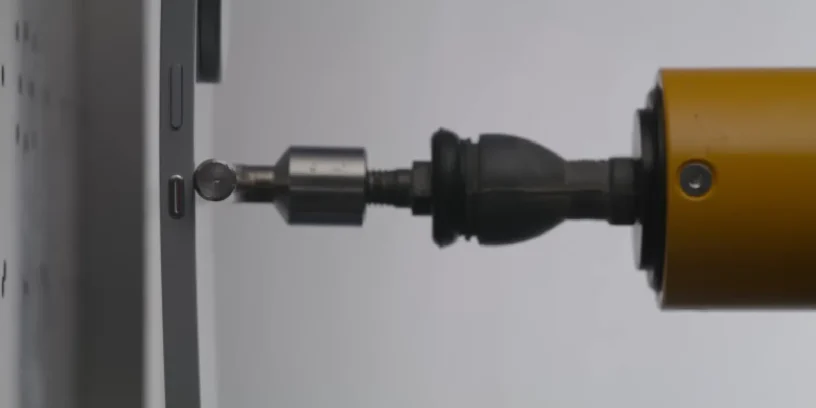
One of the critical points in the video is the use of a 500-gram steel ball dropped onto the screen. This direct impact resistance test is the standard for determining whether the glass and OLED panel can absorb energy without fracturing. This is in addition to the torsion or "bend test," where machines apply force measured millimeter by millimeter to prevent structural failures like those that have affected other manufacturers in the past.
ADVERTISING
In terms of micro-resistance, Nothing highlights the abrasion test with stones and steel wool. The aim is to simulate the wear and tear suffered by the chassis and glass when in contact with keys or rough surfaces. It's a pragmatic approach: the device must maintain its premium appearance even after months of constant friction in the user's pocket.
IP sealing and extreme thermal performance
The certification IP64 of the Phone (3a) Pro This is not an arbitrary figure. The video shows dust chambers where particles are forced into the device by turbulence. A failure here means a clogged microphone or an internal short circuit. As for liquids, the testing process includes pressurized jets and simulated accidental immersion.
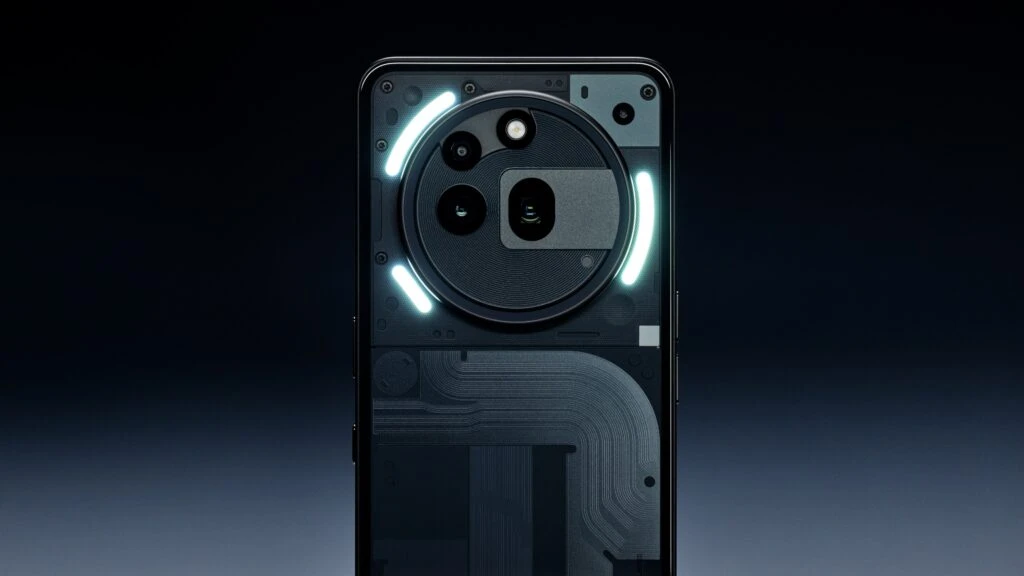
On the other hand, the extreme temperature test is what truly puts the battery chemistry and processor stability to the test. Subjecting the device to a range of between -40°C and 80°C It allows the identification of possible delaminations in the materials or failures in the adhesive that holds the internal components together.
ADVERTISING
Simulation of prolonged use over 120 hours
Perhaps the most technical aspect is the connectivity lab and the software stress test. Nothing uses a script that replicates Five years of activity in just five days, Running over one hundred applications simultaneously and without interruption. This type of accelerated aging testing is essential to ensure that the operating system maintains long-term fluidity and that thermal management is efficient under maximum load.
Finally, the use of "Big Bertha," their radio frequency laboratory, underscores the importance of connectivity in harsh environments. They use lasers to ensure that the antennas maintain optimal reception regardless of the angle or electromagnetic interference in the surroundings.



Leave a Reply